



Decoding Magnesium Bioavailability: A Complete Hourly Timeline and Compound Analysis
Explore how different magnesium compounds perform hour-by-hour. Discover peak bioavailability rates, tissue targets, and the benefits of Vitamin B6.


Higher risk for heart and brain issues; common in Western diets.

Some intake, but not enough to support performance or resilience.

Noticeable improvements in focus, stress recovery, and daily health.

The target zone for cardiovascular protection and cognitive balance.
Despite oceans of supplements, most people in the US and Europe still fall short of this ideal range. Meanwhile, populations in Norway, Iceland, and Japan consistently reach that protective 8%...
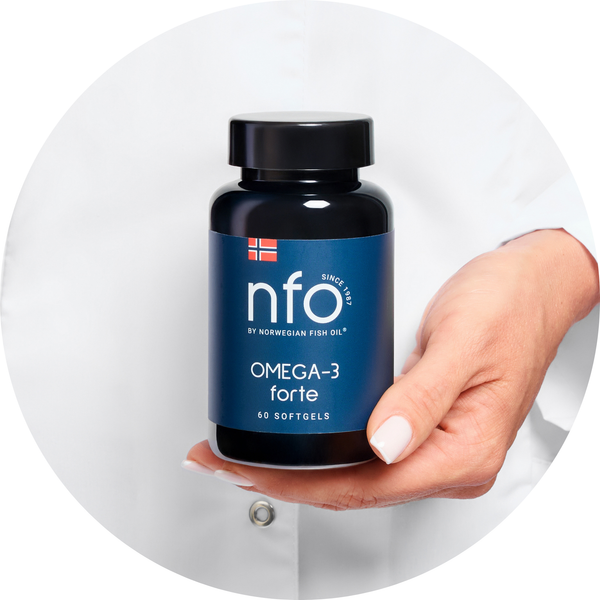
In a controlled 3-month clinical study, 60 professional athletes took NFO Omega-3 Forte daily (310 mg EPA + 205 mg DHA). The results demonstrated measurable improvements in cardiovascular and recovery markers.
Omega-3 Index restored – 18% of athletes started below the healthy 8% level; after 3 months, none remained deficient.
Daily NFO Omega-3 intake optimizes the Omega-3 Index, enhances endurance, and supports heart and brain health – naturally.
Kruglova I.V., Davidyan O.V. (2017). Effectiveness of Omega-3 Polyunsaturated Fatty Acids in a Complex of Recovery Measures for Athletes. Voprosy Dietologii, 7(3): 20–27. DOI: 10.20953/2224-5448-2017-3-20-27.


In a 6-month prospective study involving 90 children (ages 3–17) with lipid metabolism disorders, daily supplementation of NFO® Omega-3 (1000–2000 mg EPA + DHA) raised the share of participants with an optimal Omega-3 Index > 8% from 13.3% to 38.8%.
No side effects were reported — only measurable biochemical improvement and faster recovery.
The effect of omega-3 polyunsaturated fatty acid deficiency on the lipid profile and metabolic status of children of various ages withheterogeneous lipid metabolism disorders / I.N. Zakharova [et al.] // Pediatrician’s practice. 2024;(2)

A parallel 6-month clinical study involving 87 children and adolescents (ages 6–17) showed remarkable results.
After daily intake of NFO® Omega-3 (1000 mg):
Zakharova IN, Korchagina IuV, Pshenichnikova II. Positive effect of ω-3 polyunsaturated fatty acid supplementation on cognitive functions of childrenand adolescents with lipid metabolism disorders. Pediatrics. Consilium Medicum. 2024;2:***-***. DOI: 10.26442/26586630.2024.2.202930


Backed by human studies showing real improvements in cholesterol, triglycerides, and Omega-3 Index | Learn more.

Formulated to raise your Omega-3 Index and optimize heart, brain, and cell performance in just 3 months | Learn more.

No heavy metals, no contaminants, and ultra-low oxidation.

Purpose-built for real needs, from daily support to critical deficiency.

Every batch published with lab data and oxidation values – full proof, no hype | re: Certificate of Analysis in Products.

Measurable gains in energy, focus, and recovery | Learn more.


Explore how different magnesium compounds perform hour-by-hour. Discover peak bioavailability rates, tissue targets, and the benefits of Vitamin B6.

What can omega-3 offer your training routine? Explore the evidence on muscle soreness, recovery and performance—and why findings in beginners may not apply to trained athletes. A clear guide to...

How much omega-3 do you really need each day? Learn the difference between fish oil, EPA and DHA, how to read supplement labels, and when your needs may change. A...
You are currently shipping to United States and your order will be billed in USD $.

